A site cut after demolition is the earthworks that turn a cleared block into the levels on the drawing. It is not the demolition. If footings, live pipes or a root ball are still in the building pad, they belong in the handover notes before we price the cut, because they change the hours and the loads.
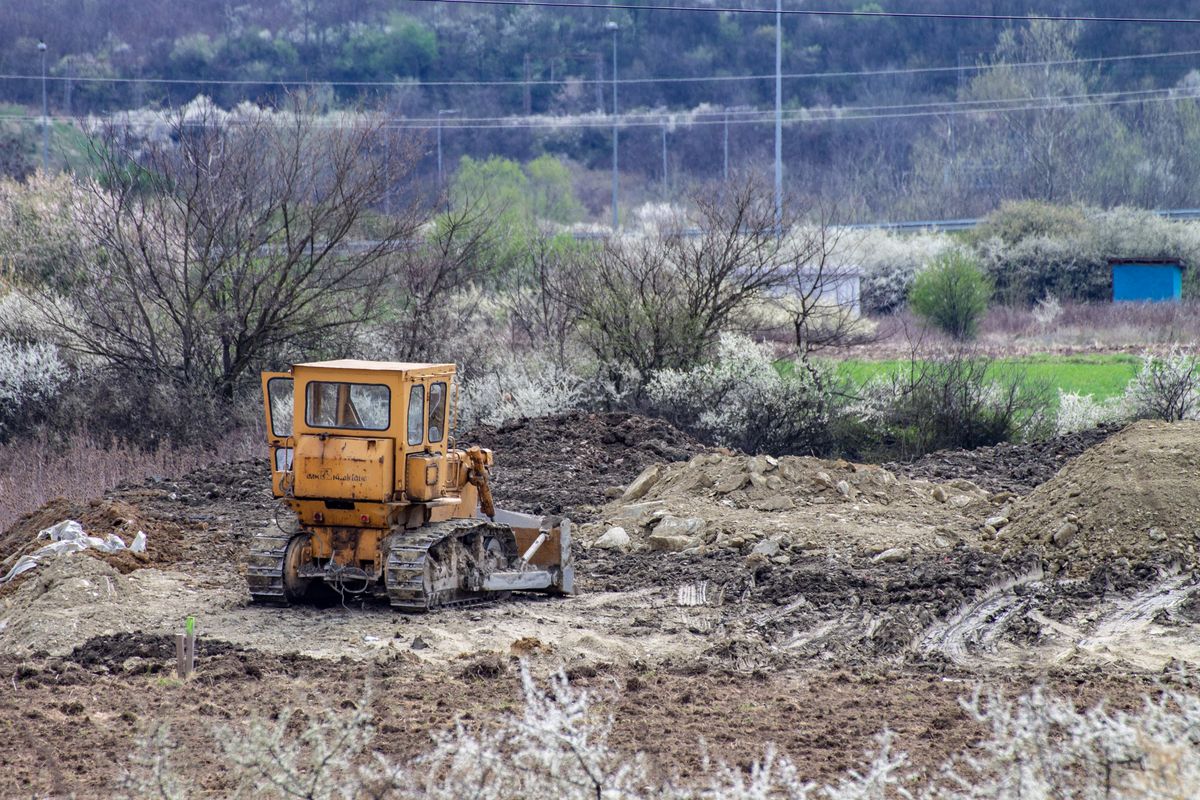
The cut starts at handover, not at the first wall coming down
Demolition finishes when the scope on that quote is on the truck or stockpiled where the next crew agreed. The site cut starts when we can see the ground we are supposed to lower. Those are sequential jobs. Overlapping them to “save a day” usually spends the day twice: once shifting rubble with an excavator that should be cutting, and once arguing about which quote owns the pile.
Write the handover in plain language. “Slab out, footings out to 300 mm below cut level, no stockpile on the building pad, temporary fence still up.” If that sentence is not true, the earthworks quote either waits or grows an exclusion. We would rather wait a morning than cut blind and hand the concreter a pad with a surprise strip footing in the corner.
Our site cut crews are based in Melton and work across the west, north and south-east. The same handover rule applies in Werribee, Tarneit, Caroline Springs and the inner west. The suburb changes the haul. It does not change the need for a clear pad.
Footings and old concrete
A house slab is obvious. The footings under it are not, once the slab is broken and the photos from the street look “clean”. Edge beams, pad footings under a pergola that was demolished years ago, and a thickening where a spa used to sit all sit at depths that collide with a new waffle or raft.
If the demolition contractor’s scope included “slab and footings”, ask for that in writing and look at the pad before you book the cut. If it stopped at the slab, the concrete still in the ground is either added to the clearance or added to the earthworks. Put it on one quote. Concrete in the cut is slower than clay, and it fills a truck with less volume than the bucket suggests because it is heavy and awkward.
We do not treat leftover reinforcement as a recycling essay. We load it as the quote describes and take it where that load is allowed to go. If you need a particular receiving site, name it before the first truck. Spoil and waste are taken to licensed recycling and disposal facilities in Melbourne's west, with clean fill, rock and concrete separated for reuse wherever possible.
Pipes, pits and things that are still live
Stormwater, sewer branches, agricultural drains and an old water service to a shed are routine on a block that has already had a house. Some are dead. Some are not. The locate information and the hydraulics plan are the instruction. A faded paint mark from a previous owner is not.
Before trenching for the new house we expect the same care as any other trenching job: the asset locate in date, the plumber’s sketch, and a hold if the marks and the ground disagree. Bulk cut is shallower than a sewer trench on many jobs, but it will still find a pipe laid at 400 mm if that pipe crosses the pad.
Tell us about a disused septic or a grease trap the same way. Digging it out is earthworks. Deciding it is safe to cart, and where it may go, is not something we invent on the truck radio. Spoil and waste are taken to licensed recycling and disposal facilities in Melbourne's west, with clean fill, rock and concrete separated for reuse wherever possible.
Roots, stumps and fill
A stump inside the building area has to come out to below the cut, or the engineer has to accept it. Grinding flush with a yard that is about to be lowered 400 mm does not remove the root ball. We have opened plenty of “cleared” yards and found the grinder stopped at yesterday’s surface.
Fill is the other leftover. Demolition sites and old extensions get levelled with whatever was handy: brick bats, clay, and sometimes material you do not want under a slab. If the cut is only trimming the top, that fill stays in the platform. If the cut goes through it, the spoil is no longer “clean clay” and the truck rate changes. Photos of a test hole, or a note from the engineer, are worth more than a guess from the footpath.
Trees that must stay need a protection note. We will not assume a fence on the nature strip means the root zone is ours to cut. If a planning overlay or a permit condition applies, send the page that says so. We follow that page. We do not rewrite it.
Keep rubble and spoil as separate lines
Demolition rubble is brick, tile, timber, plaster and the slab in that scope. Cut spoil is the soil and rock we excavate to reach the levels. They often end up beside each other for an hour. They should not end up on the same invoice line unless both contractors have agreed the load.
Earthmoving Melbourne carts the cut with our own tippers. See truck work for how load counts change when the street is tight. If there's an old house or shed on the block, it needs to be demolished and cleared before the site cut. Rubble from that work should not be mixed into the clay loads.
When you are ready, send the address, the handover photos, and the cut sheet to the quote form or call 0414 011 405. If the pad is not clear yet, say what is still there. A shorter email with the truth is more useful than a long one that calls the block finished.
FAQ
Should the slab be gone before the site cut?
If the new design needs it gone, yes. A slab left in the pad is either a demolition item or an earthworks item, and it should be named in one of the two quotes. Leaving it as “someone will sort it” is how the concreter arrives to mesh and brick.
Do you cut through live services?
No. Disconnection is done by the relevant trade before we dig. We work to the plans and the locate information you provide. An unmarked live service is a stop, not a bonus metre of trench.
Are tree roots part of a site cut?
Roots inside the cut depth are part of making the pad. A stump-grind or a protected tree under a planning overlay is a different instruction. Tell us which trees stay.
Can demolition rubble and cut spoil go in the same truck?
Only if the receiving site has agreed to that load and the quote says so. We keep demolition rubble in the clearance scope and cut spoil in the earthworks scope unless you have written otherwise.