Before the Day
Most of what makes a site cut go smoothly happens before the excavator comes off the float.
- The cut sheet and pad level are agreed with the builder or engineer
- The surveyor's set-out pegs and benchmark are in and haven't been knocked out
- Underground services are located through Before You Dig Australia (BYDA)
- The estate's rules on crossover protection and mud on the road are known
- Rubbish, pallets and old fencing are off the lot
- The neighbours know trucks are coming
7:00: Arrival and Walk-Around
The float drops the excavator and the first job is a walk-around: where the trucks come in, where they turn, what's overhead, where the pits and service points are. Crossover protection goes down before any machine crosses the kerb. Then we find the benchmark the drawing refers to and check the pegs against the plan. If something doesn't match, this is the cheapest moment to find out.
Setting the Laser
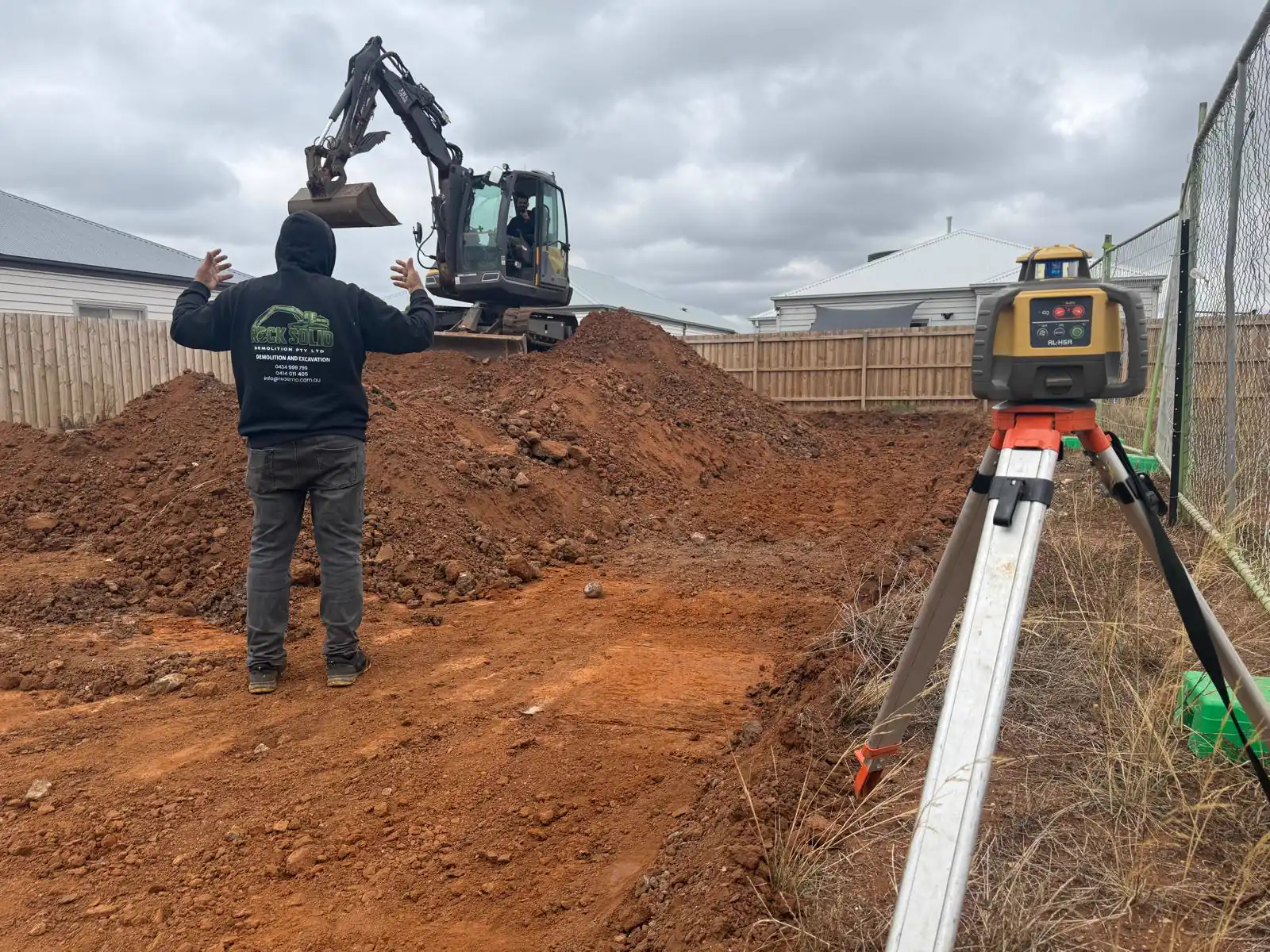
A rotating laser goes up on a tripod and is set to the design level relative to the benchmark. A receiver tells the operator how far above or below level the bucket is. From then on, every pass is checked against the same beam. That's how a pad ends up level across its whole width instead of "looks about right".
Topsoil, Then the Cut
Grass and topsoil come off first. If you want it kept for the garden, it goes in its own pile; otherwise it's the first few loads out. Then the excavator works down to pad level, cutting wider than the slab so the formwork and edge beams have room. On clay we check levels constantly. Overcutting and filling back is exactly what a good operator avoids.
The Tipper Runs
Where the frontage allows, tippers are loaded on the lot instead of from the road. The run order is planned so one truck is coming back as the next is filling, and being based in Melton keeps those runs short. Every load is counted, and the tip dockets tell you where the spoil went. Our truckloads guide shows how many to expect for your block.
If we hit something that isn't on the drawing, we stop and call. Digging first and explaining later is how site costs blow out.
When something turns up
Basalt floaters, an old pipe, buried rubbish from the subdivision. When the bucket finds something that isn't on the drawing, we stop, take photos and call the owner or builder before spending money on it. Rock is handled the way the quote says it will be. See what happens when you hit rock.
Final trim and level check
The pad gets a final trim, levels are checked at the corners and across the middle, and the cut edges are battered back so they don't slump. We shape the ground around the pad so rainwater runs away from it instead of pooling on it, because ponded water on clay is the fastest way to ruin a good cut.
Street Clean and Handover
Before the float comes back, the crossover and the road get swept, and anything that left the lot on a truck tyre is cleaned up. Then the handover: photos of the finished pad, the level confirmed, and a call to the builder or owner that the block is ready for the next trade, usually the plumber's trenches and then the slab crew.
Your to-do list
- Be on the phone on the day, even if you're not on site
- Tell us beforehand if you want the topsoil kept
- Check the pegs are still in the ground the day before
- Move cars, bins and anything parked across the frontage
Frequently Asked Questions
How long does a site cut take in Melton?
A detailed cut on a flat estate lot is often finished in a day. Deeper cuts, sloping blocks, rock or wet clay can push it to two days or more.
Do I need to be on site on site cut day?
No, but stay reachable by phone. If we hit rock, old services or anything not on the drawing, we stop and call before spending your money.
What happens if it rains on site cut day?
We often work through light rain. Once the clay starts smearing and trucks can't leave the lot clean, we stop. A day's delay is cheaper than a pad that fails compaction.