
Crystalline silica is already a Victorian occupational health duty. It is easy to blur it with the engineered-stone ban, or with a national rename of exposure standards scheduled for 1 December 2026. Those are not the same thing, and none of them is a 2027 rule that stops a residential site cut.
This is general information, not safety or legal advice. The employer doing the work has the duty. If you are a homeowner, the useful step is knowing which jobs should have a written dust control, and asking for it.
What Victoria already requires
WorkSafe's guide says a crystalline silica process includes using a power tool or other mechanical plant to cut, grind, polish or crush material containing crystalline silica, or to do any other activity on that material that generates crystalline silica dust. It also includes road headers, mechanical screening, quarrying, tunnelling, and a process that exposes a person to crystalline silica dust from manufacturing or handling that material.
High risk crystalline silica work, in the guide WorkSafe published on 24 March 2026, is an engineered stone process, or work connected with a crystalline silica process that is reasonably likely to result in an airborne concentration above half the exposure standard, or a risk to the health of a person at the workplace.
Regulation 319L of the Occupational Health and Safety Regulations 2017 says an employer or self-employed person must not do that high risk work unless a crystalline silica hazard control statement is prepared before the work starts, and the work follows the statement. If the work is also high risk construction work, the same regulation says a safe work method statement is enough where it covers the matters the silica statement has to cover.
If the statement is not followed, the regulation says the work stops until it is followed or reviewed. That is an existing regulation, not a draft.
What is not automatic on a site cut
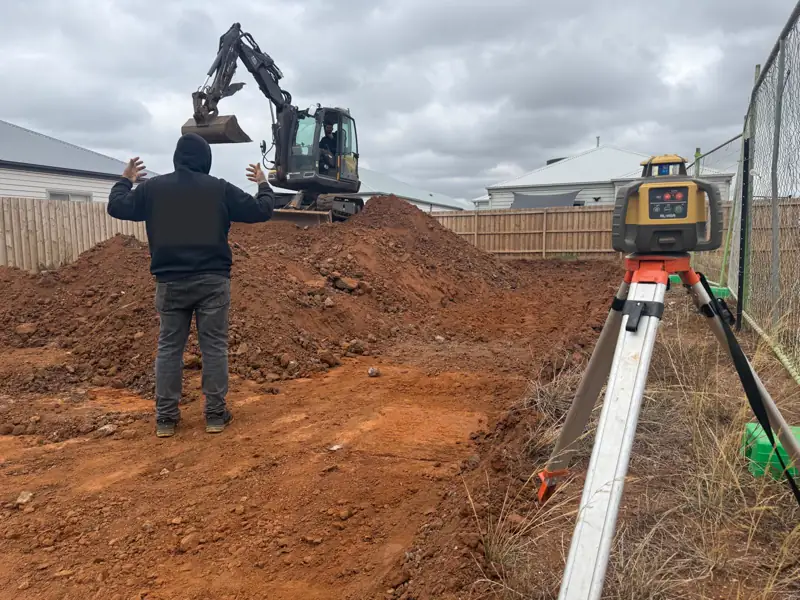
A site cut on Melbourne's western clay is usually an excavator trimming soil to the engineer's levels. WorkSafe's definition is aimed at processes that generate crystalline silica dust from material that contains it. Crushing basalt, hammering rock, cutting concrete and screening crushed material are much closer to the words on the page than loading moist clay into a tipper.
So a blanket claim that "every 2027 site cut needs a silica plan" is not what the Victorian page says. A blanket claim that earthworks never create silica dust is not what it says either. Rock breaking is the job to be honest about. Our rock-on-a-site-cut guide is where that work is described. If the quote includes a breaker or concrete cutting, ask whether the safe work method statement deals with dust, and who is responsible for it.
Operating the excavator itself is a separate licensing point. WorkSafe's high risk work licence page says you do not need that licence to operate earthmoving equipment such as an excavator. Lifting a load with the machine can still bring in dogging, which is a licensed class. Read WorkSafe's page on excavators used to lift and suspend loads if that is part of the job. The earthmoving plant page was reviewed on 6 August 2026.
The national page, including 1 December 2026
Safe Work Australia's silica guidance says the workplace exposure standard for respirable crystalline silica is 0.05 mg/m³ as an eight-hour time-weighted average, and that exposure must be kept as low as reasonably practicable. The same national topic page points readers to workplace exposure limits for airborne contaminants from 1 December 2026, when the national materials rename exposure standards as exposure limits.
WorkSafe Victoria applies the Occupational Health and Safety Act 2004 and the Occupational Health and Safety Regulations 2017. A rename, or a code that starts in a state using the model Work Health and Safety laws, is not by itself a new Victorian offence. Use the WorkSafe Victoria pages for a site in Melton, and treat the national page as the national agency's guidance. New South Wales published its own code of practice on respirable crystalline silica, which its editorial note says commenced on 20 February 2026. That code is an NSW document.
For a homeowner hiring site cut or trenching, the practical request is simple. Ask what the job actually disturbs, and ask for the safe work method statement where the work is high risk construction work. Do not accept a verbal assurance that "2027 rules" have banned a particular machine unless the person can point to the Victorian page and the date.
Frequently asked questions
Does every Melton site cut need a crystalline silica hazard control statement?
Not on the wording WorkSafe has published. The statement is required for high risk crystalline silica work. The employer or self-employed person has to decide whether the actual process meets that definition. Digging clay is not the same process as crushing rock or cutting concrete.
Is there a new silica law for Victorian earthmoving starting in 2027?
We could not find a Victorian commencement date in 2027 for this topic. WorkSafe's identification guide was published on 1 July 2024. Its hazard-control-statement guide was published on 24 March 2026. Safe Work Australia's national page refers to workplace exposure limits from 1 December 2026. Victoria runs its own OHS laws, so check WorkSafe before treating a national rename as a new state rule.
Sources
- High risk crystalline silica work: identification and management, WorkSafe Victoria, published 1 July 2024.
- Preparing a crystalline silica hazard control statement, WorkSafe Victoria, published 24 March 2026.
- Occupational Health and Safety Regulations 2017, regulation 319L.
- WHS duties for silica, Safe Work Australia, including the 0.05 mg/m³ standard and the pointer to workplace exposure limits from 1 December 2026.
- High risk work licence, WorkSafe Victoria. The page states that earthmoving equipment such as an excavator does not need this licence.
- Managing risks of respirable crystalline silica in the workplace, SafeWork NSW code of practice. The editorial note says it commenced on 20 February 2026. It applies in New South Wales.
Safety duties depend on the task. Check the WorkSafe pages before you treat this summary as the control for a particular job.